1 credit · 1 photo
AI Polaroid trend generator
One selfie in, one 4:5 instant-flash Polaroid out — the look filling Instagram in 2026, generated in about 30 seconds.
Powered by FLUX · ~30s · 7-day input deletion · You own the photo

The AI Polaroid trend generator takes one front-facing photo and renders it as a 4:5 Polaroid — direct on-camera flash, slightly overexposed face, white border, the unmistakable signature of 2026's most-imitated photo look. Lumapic's model rebuilds the lighting on your face rather than overlaying a filter, so the output reads as a real Polaroid would: identifiable face, real flash physics, real grain.
What makes the AI polaroid trend look real
The viral AI polaroid trend isn't a filter — it's a flash physics simulation. A real Polaroid photo has direct on-camera flash falling square on the face, ambient fall-off into the room behind, paper-emulsion grain, and a 4:5 crop with that signature white border and wider bottom strip.
Most AI polaroid tools fail because they overlay a white-frame template on a regular photo. The result reads as "filter applied" because the lighting in the photo wasn't actually rebuilt to match flash physics. Lumapic re-lights the face for the on-camera flash signature first, then frames the output.
How to make an AI polaroid that works on Instagram
Instagram crops to 4:5 in the feed, which is exactly the Polaroid SX-70 aspect ratio. That match is part of why the trend works visually — a real Polaroid fits Instagram's frame without cropping.
For the carousel-style "send me a polaroid" post, generate 3-9 photos in different outfits or moods, then post as a single carousel. The 4:5 aspect ratio means each photo fills the frame; the white border separates them visually. Run each photo separately, no batch needed.
Polaroid trend AI vs. a real Polaroid camera
A real Polaroid camera produces an actual chemical photograph on instant film. You can hold it, write on the white strip with a Sharpie, and put it on the fridge. A Polaroid SX-70 or iType camera costs $80-200 and film is around $2-3 per shot.
The AI version produces a digital JPG at 2048px that looks like a Polaroid. You can share it instantly, post it to Instagram, or print it on actual Polaroid film via Polaroid's own iType printer. Different products. For the physical keepsake, get a real camera. For the digital share, AI is faster and cheaper.
What input photo works best for the polaroid AI
Use a phone front camera, not a DSLR. The Polaroid look mimics on-phone flash, not portrait-mode bokeh. Indoor lighting beats outdoor — the model leans on the flash physics to do its job, and harsh outdoor sun gives it nothing to work with.
Avoid hats and sunglasses for the first try; the model needs eye contact to nail the trend signature. A plain wall behind you reads more authentically as a Polaroid than a busy background. Don't pre-edit — no filter, no skin smoothing, no crop. The AI expects a raw selfie.
What to use it for
Six real surfaces.
- Post on Instagram as a 'send me a Polaroid' carousel
- Send to friends as a holiday card without booking a studio
- Replace the worn-out profile photo you've been meaning to update
- Build a 9-grid for a band, podcast, or small brand launch
- Print on real Polaroid film for an actual keepsake
- Use as the cover image for a Spotify playlist or zine
How it works
From upload to finished photo.
01
Upload one front-facing photo
JPG, PNG, or WebP, at least 1024px on the long edge. Indoor lighting works best — the model leans on flash physics.
02
The model renders the Polaroid pass
Direct-flash exposure, warm-room ambient fall-off, real 4:5 ratio, white border with the bottom strip Polaroid is known for.
03
Download the result
Final JPG at 2048px on the long edge. Each generation takes about 30 seconds and costs 1 credit.
Tips for best results
What actually helps.
- Use a phone front camera, not a DSLR — the Polaroid look mimics flash-on-phone, not portrait-mode bokeh
- Indoor light beats outdoor — the model leans on the flash physics to do its job
- Avoid hats and sunglasses for the first try; the model needs eye contact for the trend signature
- A plain wall behind you reads more authentically as a Polaroid than a busy background
- Don't pre-edit the input — no filter, no skin smoothing, no crop
- If your output looks too clean, try a slightly underexposed input — the model needs darkness to push the flash
Honest comparison
How this stacks up against alternatives.
Lumapic Polaroid vs. Remini Polaroid: Remini's version is faster and cheaper at scale, but treats Polaroid as a preset — same white frame, same saturation bump, less actual flash physics. Lumapic re-lights the face for the on-camera flash signature and keeps the real 4:5 ratio. If you want a one-tap social filter, Remini is fine. If you want the photo to look like it came out of a Polaroid SX-70, use Lumapic.
FAQ
Common questions.
What is the AI polaroid trend on Instagram?
It's the viral 2025–26 trend where users post a 4:5 Polaroid-style photo of themselves to Instagram, often as a 'send me a polaroid' carousel. The look is direct on-camera flash, white frame, slightly overexposed face, soft fall-off into a dim background — the unmistakable Polaroid SX-70 signature, but generated from a phone selfie.
How do I make an AI polaroid that doesn't look fake?
The key is flash physics. Most AI polaroid tools overlay a white-frame template on a regular photo, which reads as 'filter applied.' Lumapic rebuilds the lighting on your face — direct frontal flash, ambient fall-off into the room behind, paper-emulsion grain — then frames the output at the real 4:5 ratio. Use an indoor selfie from a phone front camera as input; the model leans on flash physics that only work in lower-light environments.
Is there a free AI polaroid generator?
Free options exist (Remini's basic tier, Picsart) with watermarks or low-resolution output. Lumapic is pay-as-you-go at $0.25 per photo — full 2048px resolution, no watermarks, no subscription. You pay only for outputs you actually use.
What aspect ratio is the output?
4:5, the same as a real Polaroid SX-70 and the same as Instagram's feed crop. Posts on Instagram fit the frame without cropping. The output is 2048px on the long edge.
Can I print it on real Polaroid film?
Yes. Polaroid sells an iType printer that accepts digital input and prints on actual Polaroid instant film. The 2048px output prints cleanly. We're not affiliated with Polaroid; we just generate a digital image that's compatible with their printer.
How long does it take?
Around 30 seconds per photo.
How much does it cost?
1 credit ($0.25) per photo. Credit packs start at $2.99 for 12 credits. Credits never expire.
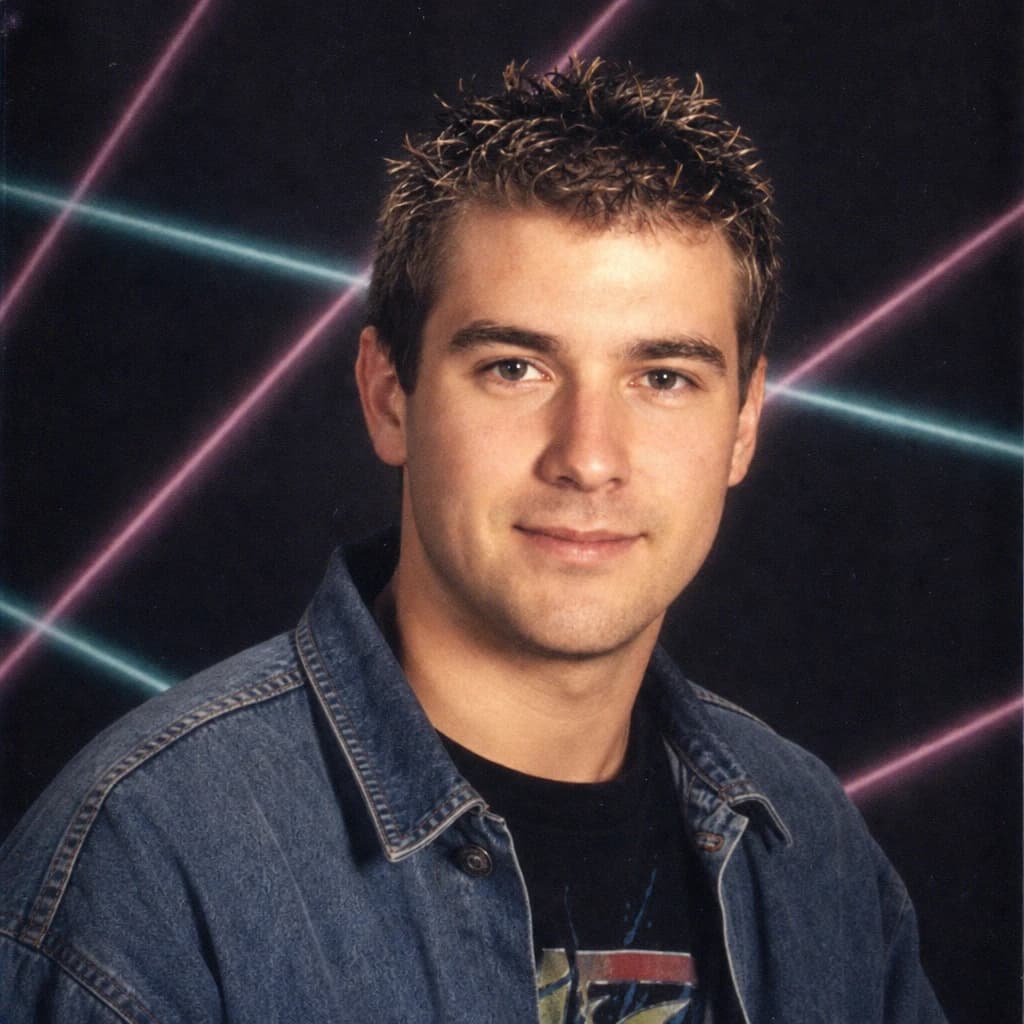

Make your ai polaroid trend generator in seconds.
Pay as you go. Packs from $2.99. Never expire.